
Last updated November 23, 2026
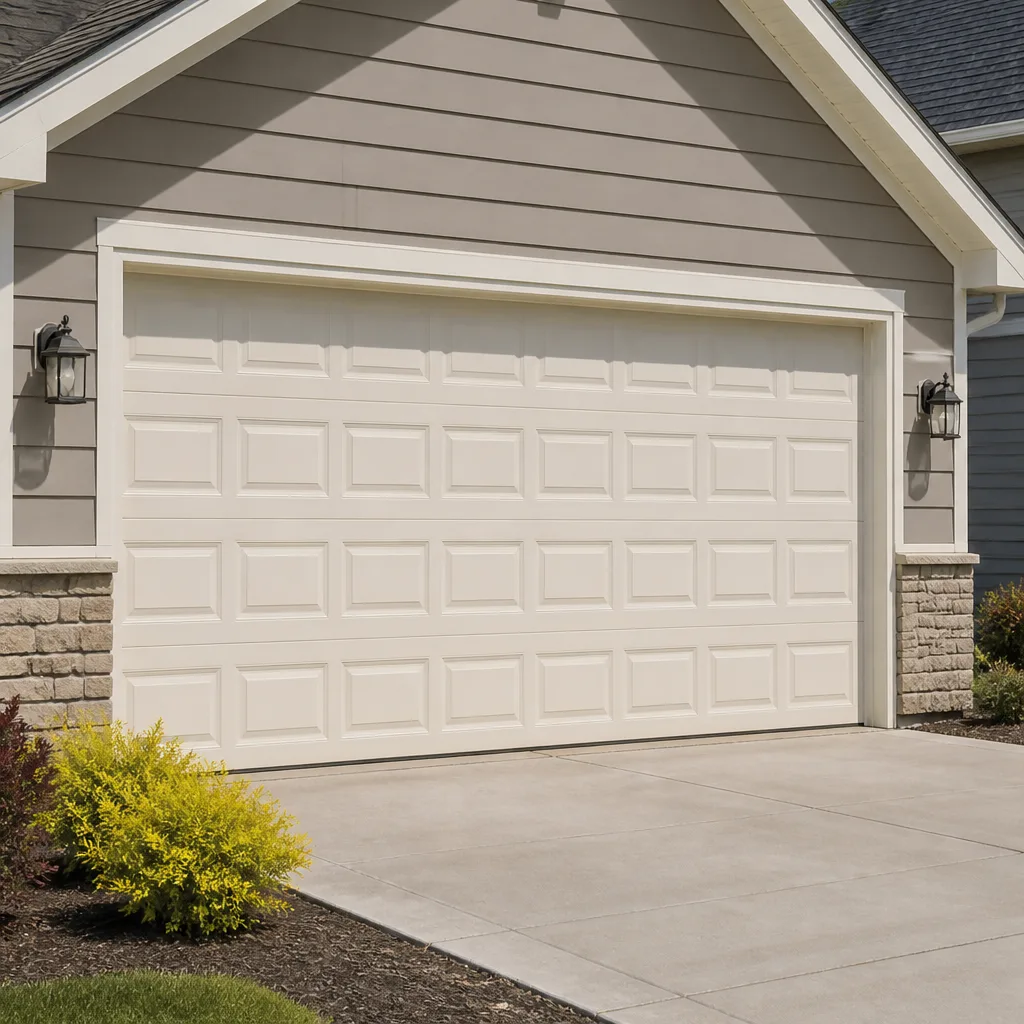 Raised-panel steel
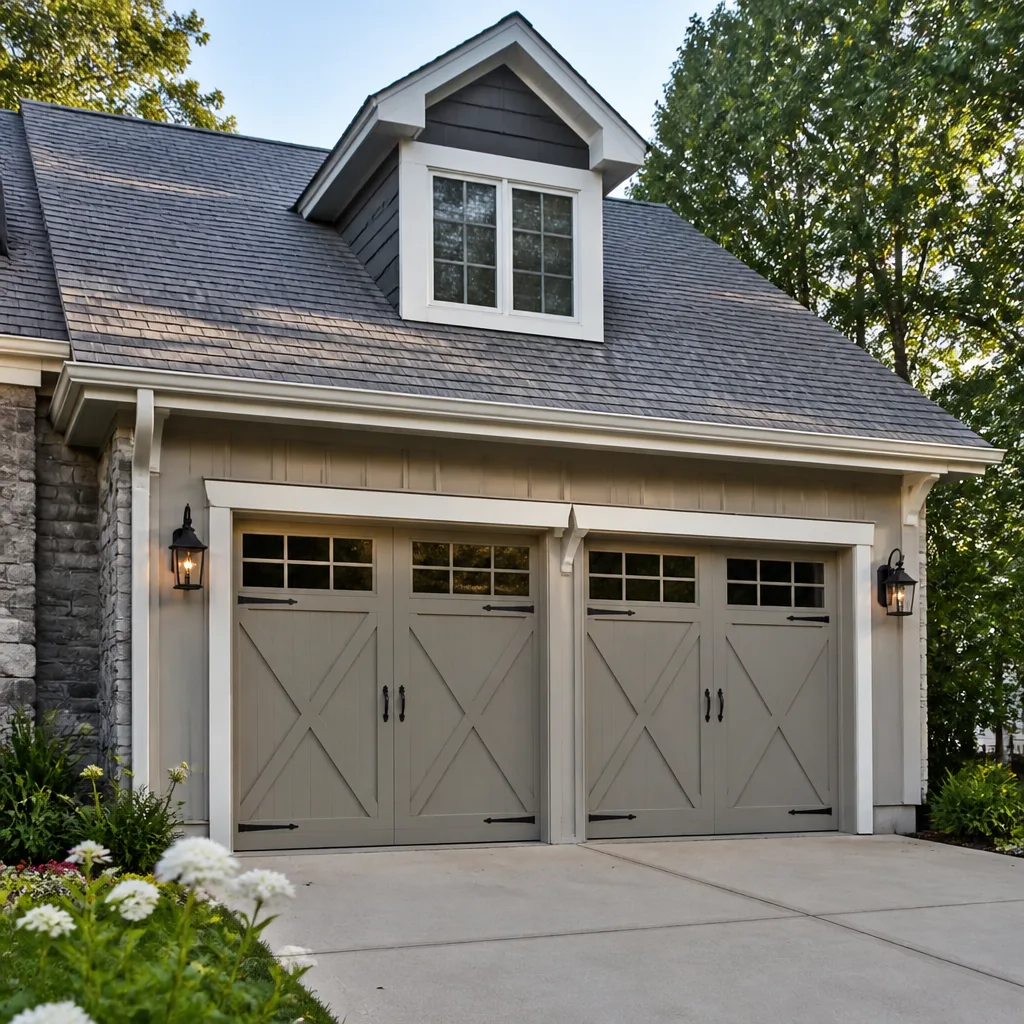 Carriage house
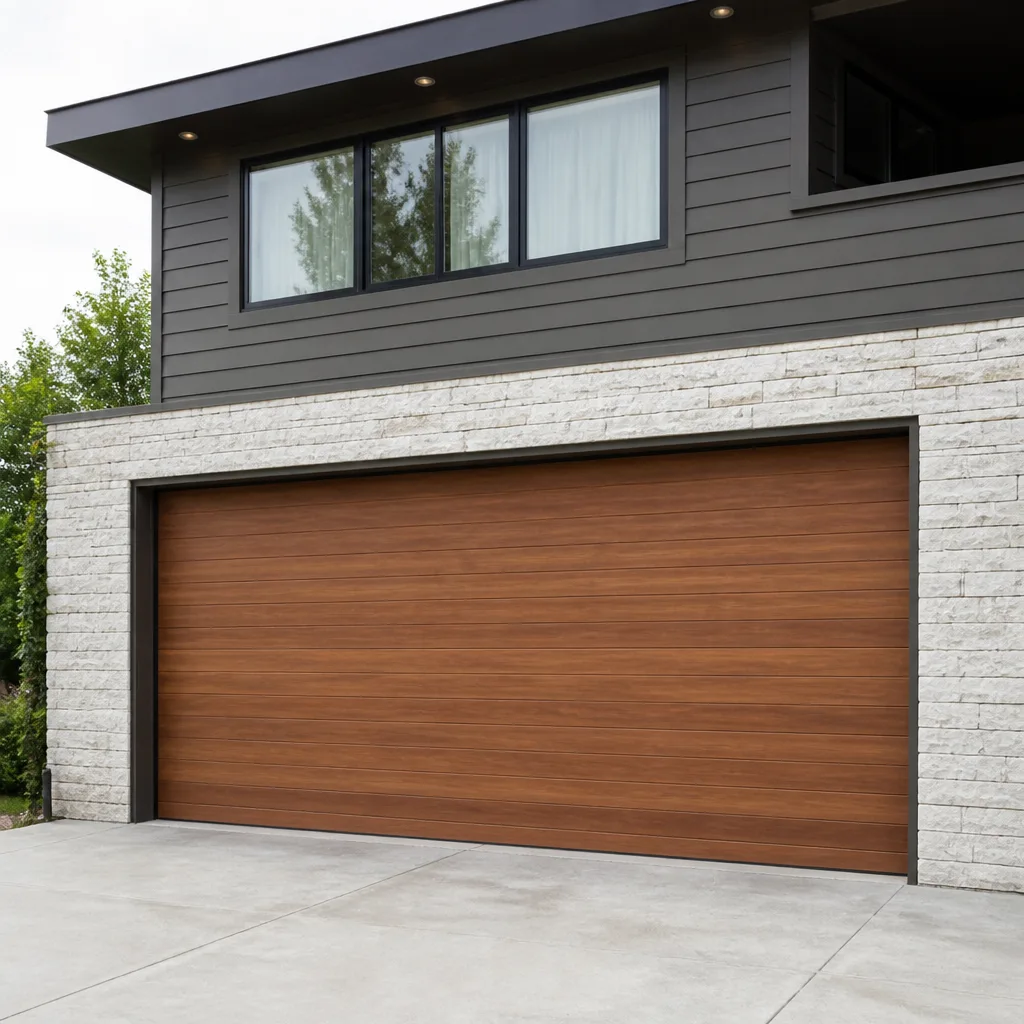 Modern flush
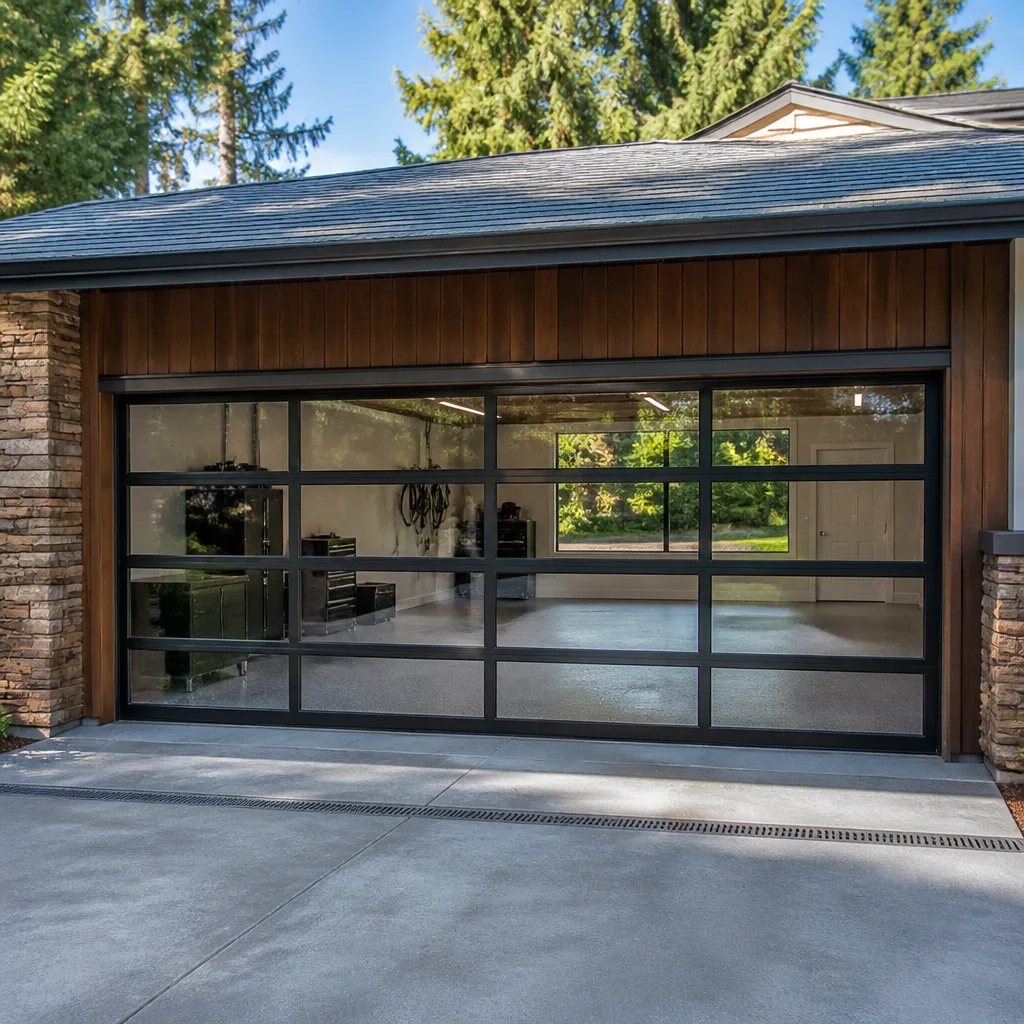 Full-view glass
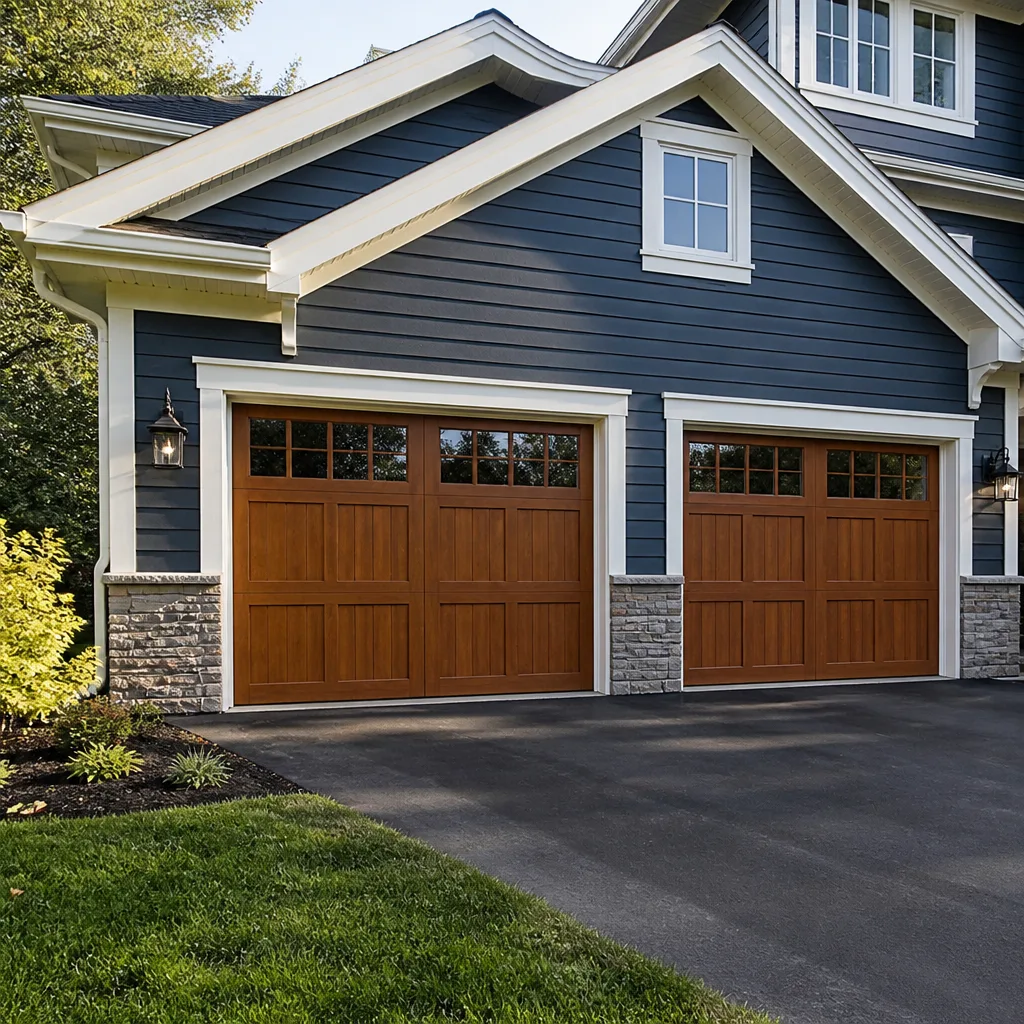 LiftMaster openers
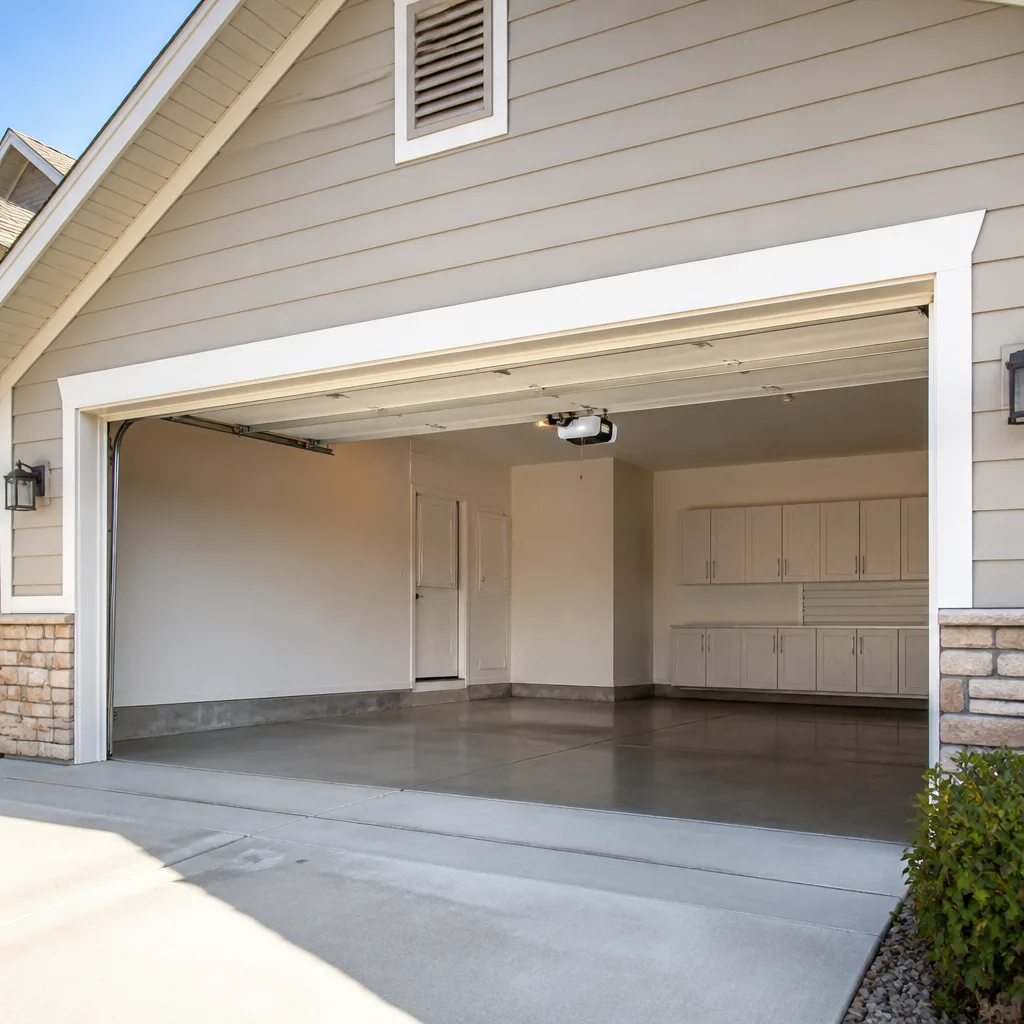 Chamberlain openers
Full 25-point door and opener safety check with every visit - springs, cables, rollers, tracks, and your LiftMaster or Chamberlain opener included
You get a price before we start. It does not change when the pro arrives.
Get your free estimateSeasonal Garage Door Care for Clinton: Year-Round Homeowner’s Guide
Most seasonal garage door guides are written for places that freeze in November and stay frozen until March. Clinton doesn’t work that way. A single week here can swing from a mild 45°F afternoon to a hard freeze overnight, then back above freezing by Thursday. That repeated crossing of the 32°F line is harder on bottom seals, weatherstripping and spring hardware than a stable Minnesota cold ever is, because the parts never get to settle. This guide walks through what to inspect in each season in Clinton, what to leave alone, and when a small maintenance task has turned into a job for a trained technician.
Quick Answer
Garage door care in Clinton follows a four-part rhythm tied to the Mid-Atlantic climate: check and lubricate torsion spring hardware in fall before metal clearances tighten, inspect bottom seals and weatherstripping in January for freeze damage, look at wood panels and paint adhesion in June before summer humidity sets in, and watch opener logic boards through July and August heat buildup in an unventilated garage. Springs, cables and opener internals are not homeowner jobs. Everything else on this list is a 15-minute visual check.
Styles & brands we work with
- Raised-panel steel
- Carriage house
- Modern flush
- Full-view glass
- LiftMaster openers
- Chamberlain openers
Table of Contents
- Why Clinton’s Freeze-Thaw Cycle Is Harder Than a Stable Cold
- The Fall Task That Matters Most: Torsion Spring Hardware
- January: Telling Freeze Damage From Normal Wear on Weatherstripping
- Summer Humidity and What It Does to Wood and Steel Panels
- What Summer Heat Does to Opener Logic Boards
- The Clinton Seasonal Checklist, Season by Season
- Brand-Specific Care Notes: Clopay, Amarr, Wayne Dalton and Craftsman
Why Clinton’s Freeze-Thaw Cycle Is Harder Than a Stable Cold
In a place that stays below freezing for months, metal, rubber and wood settle into one set of dimensions and stay there until spring. Clinton sits in the DC metro corridor where winter temperatures cross 32°F repeatedly, sometimes twice in the same 24 hours. Every crossing expands and contracts the torsion spring, the hinges, the rollers and the bottom seal by a small amount. Multiply that by dozens of crossings in a single season and you get the wear pattern we see on doors across Clinton: seals that crack before they look worn out, hinges that loosen earlier than the manufacturer expects, and springs that fatigue on a schedule that has more to do with cycle count than with the calendar.
That’s the single biggest thing generic winter prep advice gets wrong. It tells you to “winterize” once in October and forget it. In Clinton the meaningful work happens on both sides of every freeze. Here’s what actually changes:
- Bottom seals lose flexibility faster because they thaw and refreeze. A seal that stays cold stays pliable longer.
- Hinges and rollers work loose at the fasteners as the metal they sit in grows and shrinks.
- Torsion springs see more movement at the coil ends, which is where fatigue cracks usually start.
- Wood panels take on moisture during thaws and release it during freezes, which is the cycle that opens paint seams.
- Concrete tracks and anchors shift slightly as the slab moves, which is why a door that ran quiet in October can start rubbing in February.
None of this means a Clinton door is doomed. It means the inspection schedule should match the climate, not a generic template written for a colder region. A door here benefits from two light checks a year more than one heavy service.
The Fall Task That Matters Most: Torsion Spring Hardware
If you do one thing to your garage door in Clinton before winter, lubricate the torsion spring hardware and check the fasteners on the hinges. As temperatures drop, metal tolerances tighten and any friction point that was borderline in September becomes a squeal, a bind, or a strained spring in December. The spring itself doesn’t need oil. The hardware around it does.
Here’s the fall routine, in order:
- Tighten every hinge screw and track bolt by hand until snug. Don’t overtighten; you’re removing play, not crushing the bracket.
- Lubricate the rollers, hinges and the spring’s bearing plate with a garage-door-specific lubricant, not WD-40. A lithium or silicone spray designed for the trade lasts through the season.
- Wipe the torsion bar clean and apply a thin film of lubricant where it passes through the center bearing plate. That’s the part that screams in cold weather.
- Look at the spring coils closely for a visible gap or a bright stretch mark. That’s a fatigue sign, not a lubrication problem, and it means a spring repair is coming.
- Run the door up and down twice and listen. A grind or a pop is worth noting before the cold locks it in.
What we don’t recommend: adjusting the spring tension yourself. Torsion springs store enough energy to cause serious injury, and the adjustment procedure is not a homeowner task. If the door feels heavy, runs unevenly, or the spring shows a gap, that’s the point to stop and call. Our garage door spring repair work is built around exactly this kind of fall call, and our technicians have up to 10 years of experience reading the early signs before a spring fails outright.
January: Telling Freeze Damage From Normal Wear on Weatherstripping
Mid-January is when Clinton homeowners start noticing daylight under the garage door. Sometimes that’s ordinary wear. Sometimes it’s freeze damage, and the two look different if you know what to check.
Normal wear looks like this: the seal has flattened over time, the bottom lip is compressed, and the gap is even across the whole door. The rubber may be gray and dull, but it’s intact.
Freeze damage looks different. It tends to be local rather than uniform. You’ll see a crack or split at one section of the seal, usually where water pooled, refroze and pushed the rubber apart. It can appear as a chipped or missing section. The gap is uneven because the damaged section doesn’t reach the floor anymore. Sometimes the aluminum retainer that holds the seal has pulled away at one end where ice got behind it.
Here’s how to check without guessing:
- Close the door and look for daylight along the bottom. Mark where the light shows, not just whether it does.
- Run your hand along the seal at the spots you marked. A split or brittleness confirms freeze damage.
- Check the side weatherstripping at the corners, where ice tends to collect.
- Look at the bottom of the door panel itself for bubbling paint or soft spots, especially on wood doors.
A seal replacement is a reasonable DIY job if the damage is limited to the rubber lip and the retainer is intact. It becomes a service call if the retainer has pulled loose, if the damage reached the door panel, or if you find the door no longer sits square in the frame. That last point matters in Clinton because slab movement from freeze-thaw can throw the door slightly out of level. If that’s what you’re seeing, the seal is a symptom, not the problem.
Summer Humidity and What It Does to Wood and Steel Panels
Clinton summers are humid, and humidity is where wood garage doors and painted steel doors part ways in how they fail. Both need a check in June, before the worst of the moisture sets in, not in September after the damage shows.
Wood doors (including many Clopay and Amarr models)
Wood absorbs moisture through any spot where the paint or stain has thinned. The failure pattern starts small: a hairline seam at a joint, a spot near the bottom rail where road splash collects, a panel edge where the finish has worn. Through July and August those spots take on water, swell the wood, and pop the finish. By fall you’re looking at sanding and refinishing rather than a touch-up.
What to inspect in June:
- Run a finger along every joint and rail. If the paint is lifting, it’s already letting moisture in.
- Check the bottom rail of each panel, the lowest 6 inches especially. That’s where humidity plus splash damage does its work first.
- Look at the panel edges where the finish is thinnest from the factory.
- Press a fingernail into the wood at any suspicious spot. A soft spot means water has already been there.
Steel doors (including many Wayne Dalton models)
Steel fails differently. Paint adhesion is the whole game. Where the paint holds, the steel is fine. Where it doesn’t, moisture gets under the edge and starts the rust cycle. Summer humidity accelerates that cycle faster than winter ever does because the moisture sits against the metal rather than evaporating.
Check for bubbling paint, chalky texture on the finish, and rust spots at the bottom edges and panel seams. A small touch-up in June saves a panel replacement later. If the bubbling is widespread across multiple panels, the door is past touch-up territory.
What Summer Heat Does to Opener Logic Boards
A garage in Clinton in August can run 15 to 20 degrees hotter inside than the outside air, sometimes more when the door faces west. That’s the environment your opener’s logic board lives in, and heat is the leading cause of the strange behavior homeowners report every summer: the door opens but won’t close, the remote works sometimes, the wall button is dead but the app still connects.
What actually happens inside that box:
- Logic board components drift as they heat. The opener’s safety sensors and limits can read slightly off, which is why doors sometimes stop halfway in the afternoon and run fine in the morning.
- Capacitors on older openers lose capacity faster in sustained heat. A weak capacitor shows up as a door that starts to lift and stalls.
- Wi-Fi and smart modules on LiftMaster, Chamberlain and Genie openers can overheat and drop the connection, then rejoin hours later once the garage cools.
- Battery backup units lose capacity in heat. That’s a summer failure, not a winter one.
The fix for most of this is airflow, not a repair. Open the garage door to let heat out during the day. Don’t stack boxes against the opener housing. If the opener is mounted in a corner with no ventilation, a small fan does more than you’d think. If your LiftMaster or Chamberlain opener is dropping its Wi-Fi connection every afternoon in July, that’s a known heat pattern, and our garage door opener repair work covers it. If the opener is failing mechanically rather than just getting hot, the door may be fighting a binding track or a tired spring, which pushes the motor harder and generates more heat.
The Clinton Seasonal Checklist, Season by Season
Here’s the whole year in one place. Print this or keep it on your phone. Each season has three or four checks and one “don’t touch” rule.
Spring (March – May)
- Walk the tracks and clear any grit, leaves or debris that collected over winter.
- Check the bottom seal for cracking from winter freeze-thaw and replace if compromised.
- Test the safety reverse: place a roll of paper towels under the door and confirm it reverses on contact.
- Don’t adjust the spring tension yourself, no matter how the door feels. If travel is uneven, that’s a spring or track issue.
Summer (June – August)
- Inspect wood door finishes for lifting paint and steel doors for bubbling.
- Touch up any bare spot on a painted panel before humidity gets under it.
- Check opener behavior in the afternoon heat specifically. That’s when boards drift.
- Don’t ignore a door that stops halfway in the afternoon but runs fine in the morning. That’s a heat symptom worth diagnosing.
Fall (September – November)
- Lubricate hinges, rollers and the spring bearing plate.
- Tighten hinge screws and track bolts by hand.
- Look at the spring coils for a visible gap or stretch mark.
- Don’t rely on a noisy door to fix itself. Squeals get worse in the cold.
Winter (December – February)
- Check for daylight along the bottom and the side seals, marking where it shows.
- Clear snow and ice from the door’s path and from the photo-eye sensors.
- Confirm the manual release works and you know how to use it.
- Don’t force a frozen door. If the door is stuck to the floor, freeing it with a pry bar can bend the bottom panel. Wait, or call.
Brand-Specific Care Notes: Clopay, Amarr, Wayne Dalton and Craftsman
Not every brand needs the same attention. We work on Clopay, Amarr, Wayne Dalton, Craftsman and four other major brands, and the quirks are real. Here’s what we look for by brand in Clinton’s climate.
- Clopay wood and wood-look doors need the June finish check more than any other brand because their panel joints take on moisture in the same places each year. Clopay steel doors hold paint well, so a bubble is worth investigating early.
- Amarr doors are common on Clinton homes and hold up well to humidity. The check that matters is the bottom seal and the hinges, which see more freeze-thaw movement.
- Wayne Dalton steel doors are reliable, but the finish on older models can chalk and thin along the bottom rail. A June touch-up extends the panel’s life significantly.
- Craftsman openers (made by Chamberlain) are the most common in Clinton garages. Their logic boards respond to summer heat in the way we described above, and their safety sensor alignment shifts slightly as the mounting brackets take on temperature movement.
If you own one of these or any of the other major brands, our technicians arrive already knowing the system. That’s a real difference in a service call. It means we don’t spend the first 20 minutes figuring out which opener variant you have before getting to the diagnosis. For a stuck door, call our garage door repair line and mention the brand; it saves time on the visit.
Common Mistakes to Avoid
- Treating freeze-thaw like a single winter event. In Clinton the meaningful wear happens every time the temperature crosses 32°F, not just once. A door that looks fine in December can be failing by February if you only checked it once.
- Using WD-40 as a garage door lubricant. It’s a solvent, not a lubricant, and it strips whatever grease was protecting the rollers. Use a garage-door-specific spray instead.
- Forcing a door that’s frozen to the floor. Prying at the bottom seal can bend the panel, and if the spring is already under load, the extra force stresses the whole system. Wait for a thaw or call.
- Ignoring summer opener behavior. A door that only stops halfway in the afternoon is telling you the opener is struggling. Heat amplifies the symptom; it usually doesn’t cause the underlying problem.
- Skipping the fall fastener tightening. A hinge screw that’s a quarter-turn loose in October becomes a bent hinge bracket by January once the metal contracts around it.
- Painting over bubbling paint on a steel door. The bubble means moisture is already under the finish. Painting over it traps the moisture and lets the rust spread.
- Adjusting the torsion spring yourself. This is the one mistake that ends at the emergency room. Torsion springs are the highest-risk component on any garage door, and there’s no version of the job that’s safe for an untrained homeowner.
See the difference
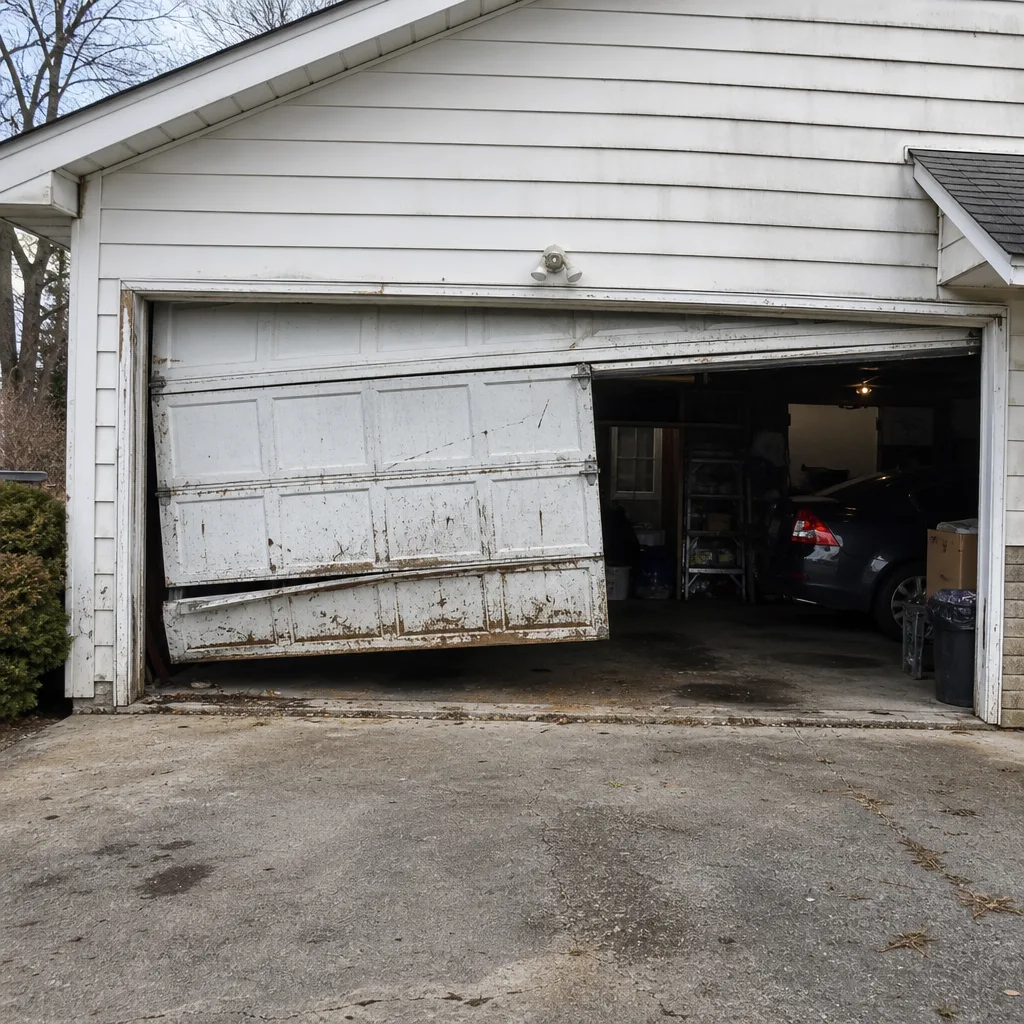 Before
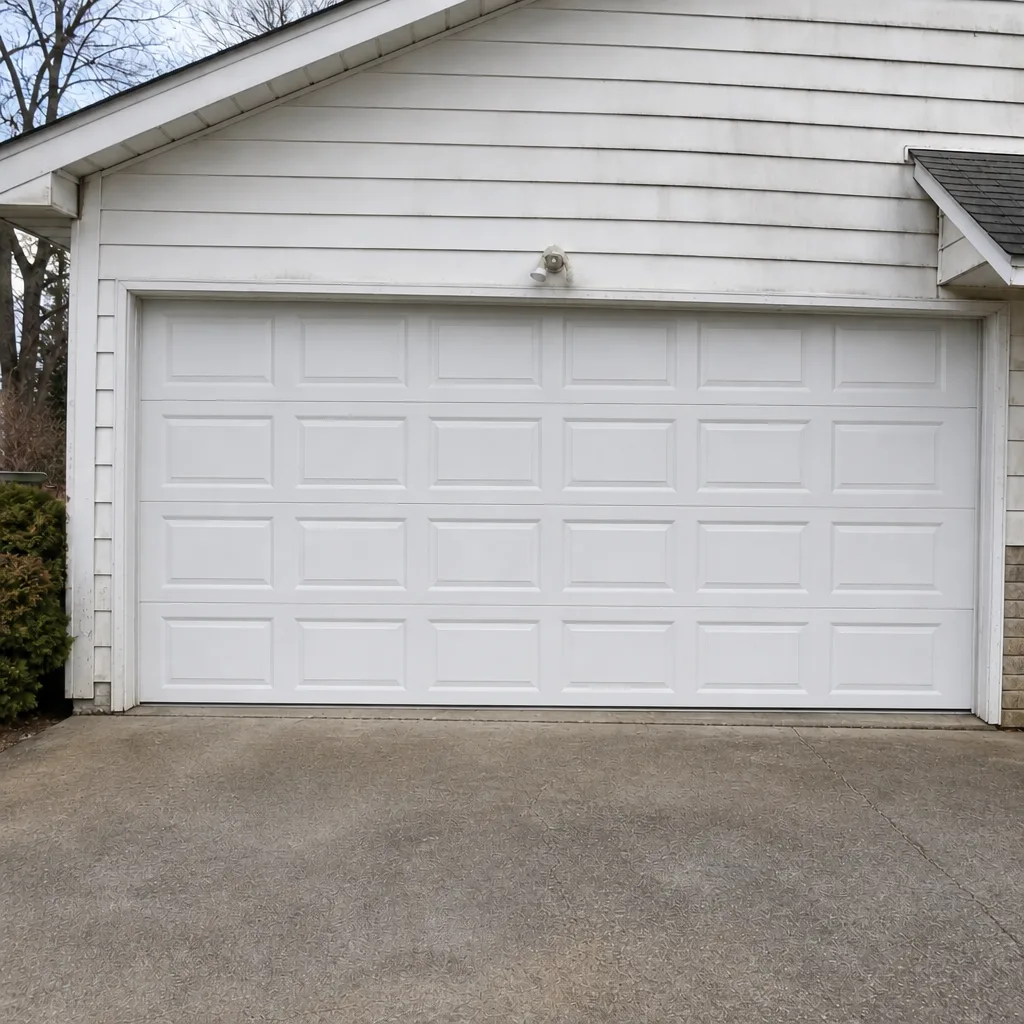 After
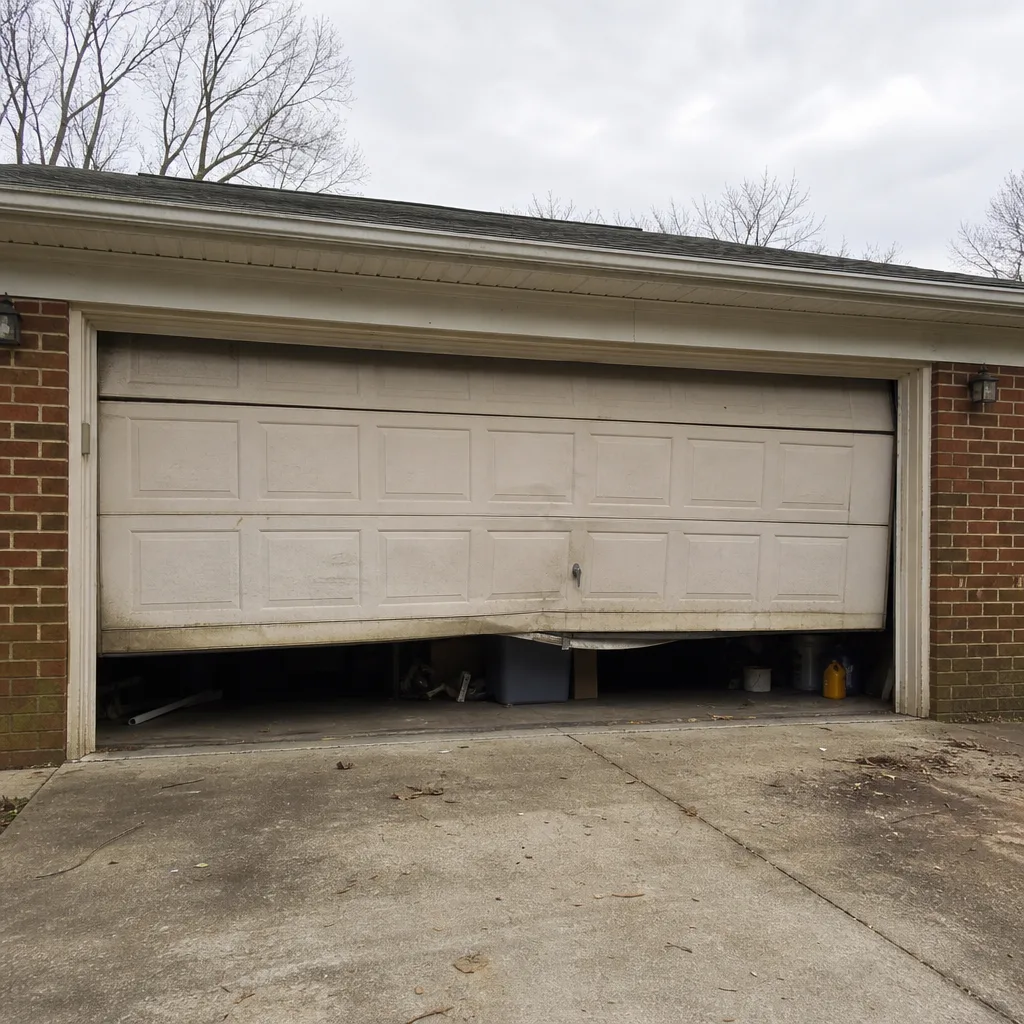 Before
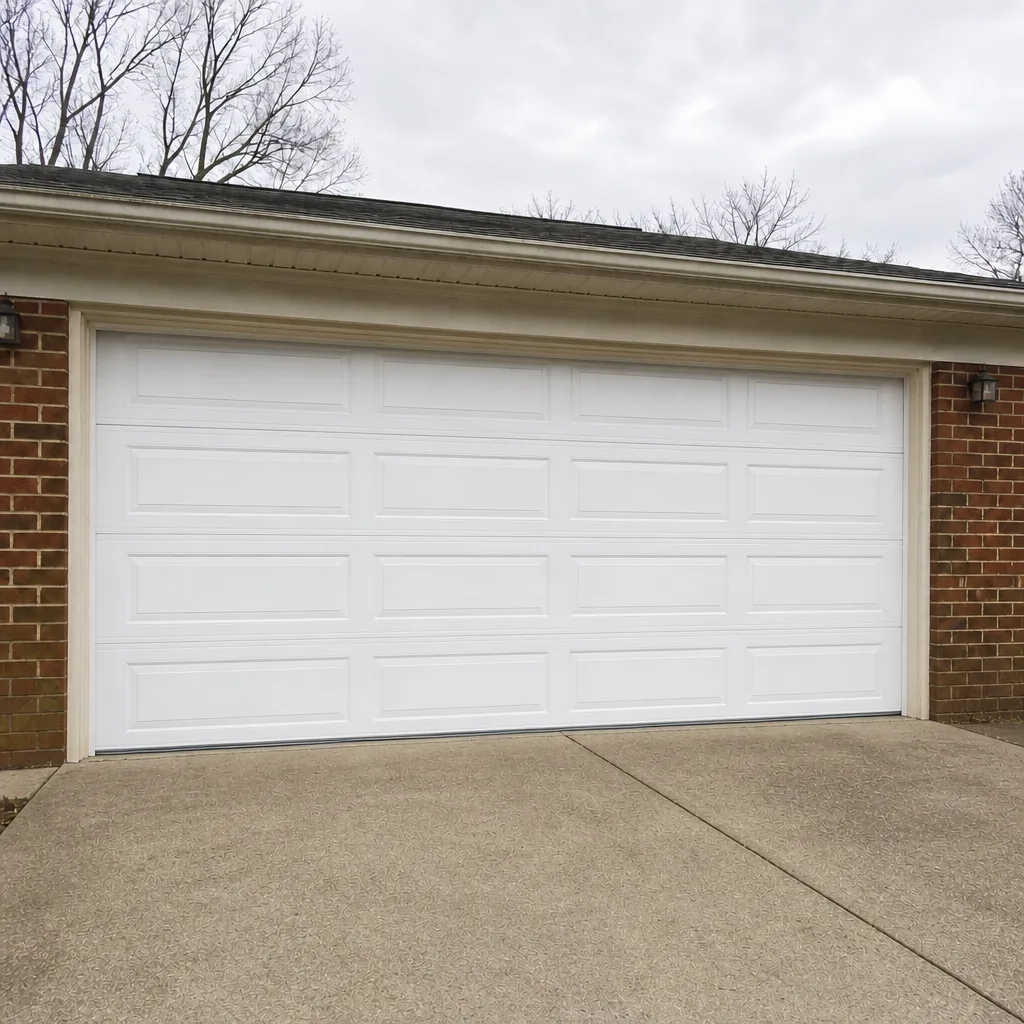 After
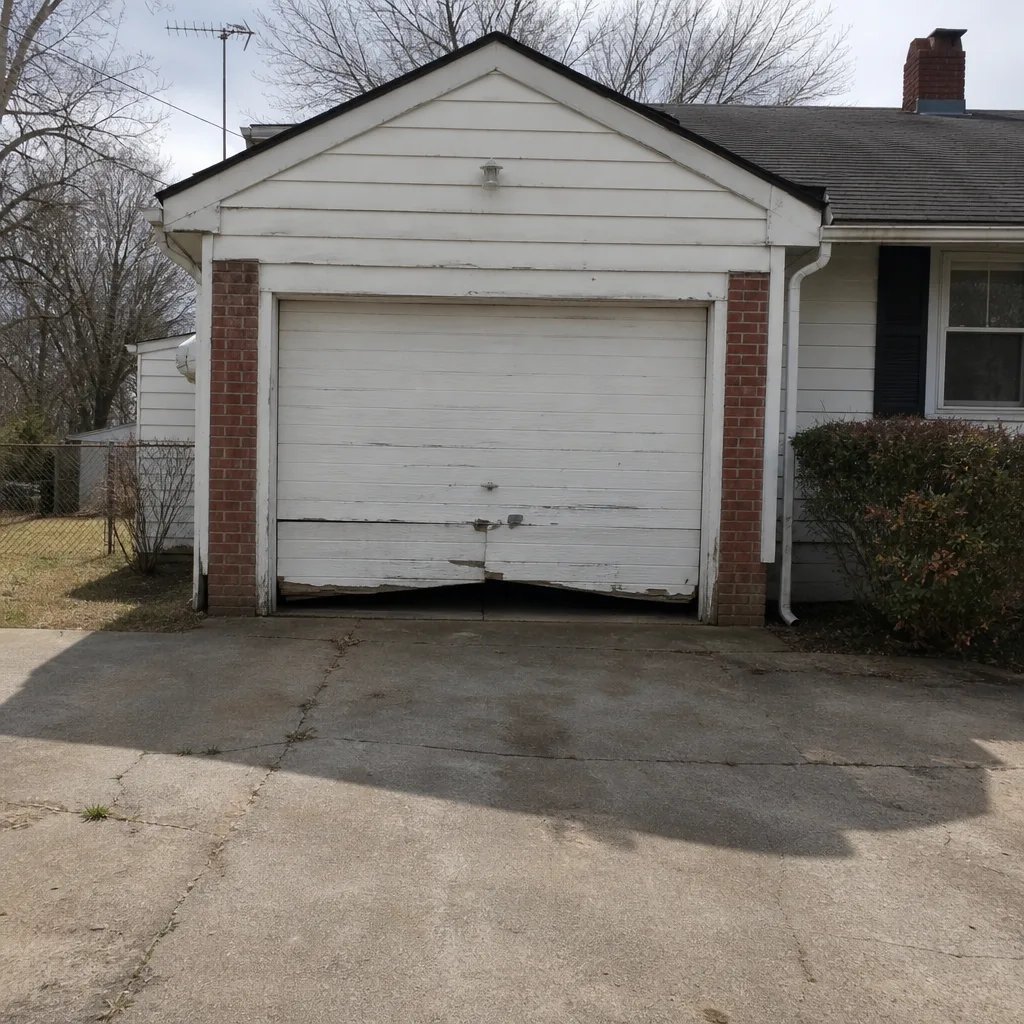 Before
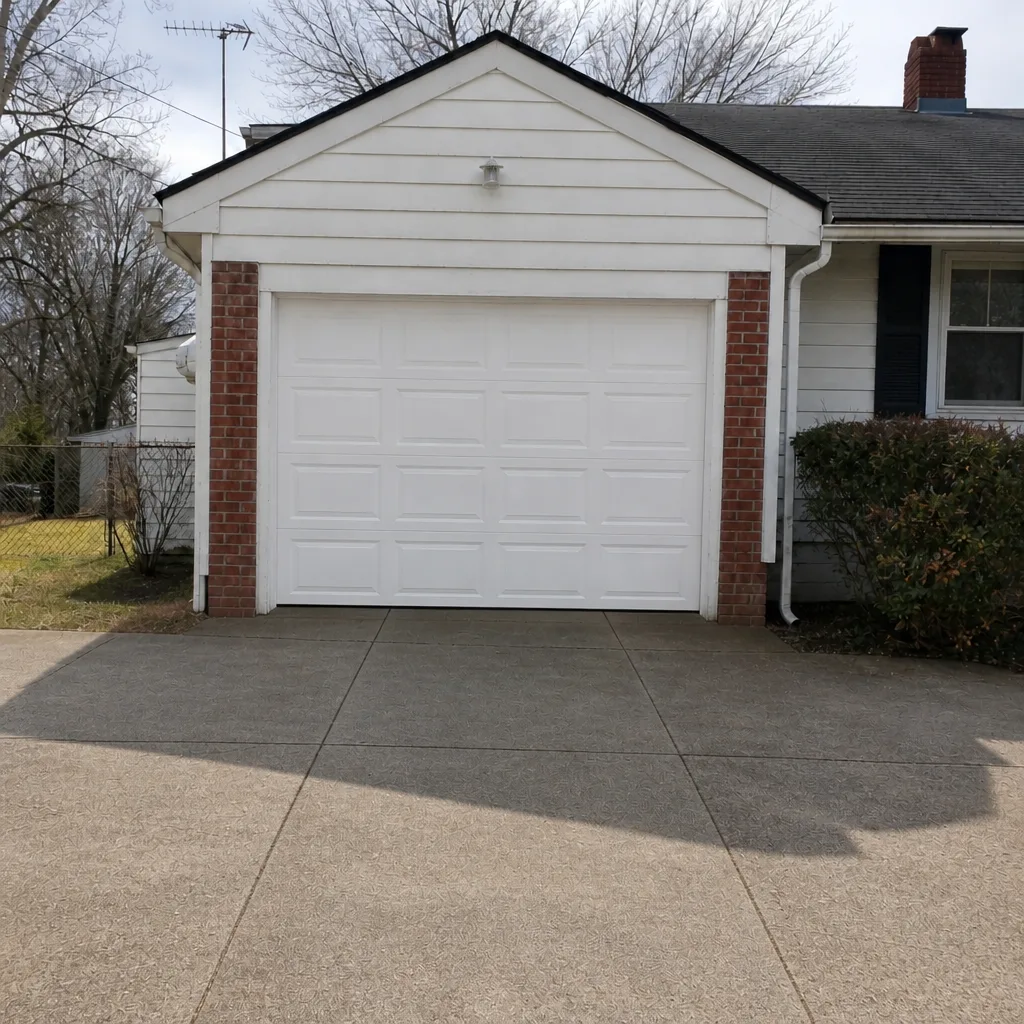 After
When to Call a Professional
Most of this guide is homeowner territory. A few things aren’t. Call a technician if you see any of the following: a visible gap or stretch mark in a torsion spring; the door feels heavy when you lift it by hand; the door runs unevenly or binds in one spot; the opener runs but the door doesn’t move; you find a broken or frayed cable; the door is stuck in winter and won’t lift; or the opener fails intermittently in heat. Any of those is a diagnosis job, not a maintenance job. A door that’s stuck and won’t open leaves your home’s largest entry point insecure, and it can trap a vehicle inside. Clinton Garage Door Repair Pros offers free estimates in Clinton. Call (866) 937-9005. We answer 24/7. Fast dispatch from 7am to 7pm, Sunday through Friday. The price is quoted and agreed before any work starts, so there’s no invoice surprise.
Frequently Asked Questions
Twice a year is the right rhythm here, once in fall before the first freezes and once in late spring before the humidity sets in. A stable-cold climate can get away with one annual service. Clinton’s repeated 32°F crossings mean the parts cycle in and out of tolerance twice a season, so the lighter, more frequent check works better than a single heavy service.
Heat buildup in an unventilated garage. The opener’s logic board and safety sensors drift slightly as they warm up, which is why a door that runs fine in the morning stops halfway in the afternoon. If your opener is a LiftMaster, Chamberlain or Genie, this is a known heat pattern. Call (866) 937-9005 for a diagnosis if the behavior persists.
Some squeal is normal in Clinton’s coldest weeks as metal tightens, but persistent squealing means the hinges, rollers or spring bearing plate need lubrication. If the squeal is accompanied by a heavy door or uneven travel, that’s a spring or track problem, not a lubrication problem. Our garage door spring repair service exists for exactly this signal.
You can replace the bottom seal yourself if the damage is limited to the rubber lip and the aluminum retainer is intact. It becomes a service call if the retainer has pulled loose, if the damage reached the door panel, or if the door no longer sits square. In Clinton, that last point is common because slab movement from freeze-thaw throws older doors slightly off level.
Wear is even and uniform across the door. Freeze damage is local, usually a split or chipped section where water pooled and refroze, with an uneven gap. Check in daylight with the door closed; mark where the light comes through if you want to be certain. Call (866) 937-9005 if you find the door has also shifted in the frame.
We service eight of the most widely installed garage door and opener brands in North America, including Clopay, Amarr, Wayne Dalton, Craftsman, LiftMaster, Chamberlain, Genie and Raynor. Our technicians have up to 10 years of experience with these systems, so they arrive knowing your door’s quirks rather than figuring them out on-site. Call (866) 937-9005 for a free estimate.
The Bottom Line
Clinton’s garage doors live in a climate that’s harder on hardware than a deep, stable cold. The freeze-thaw swing cycles bottom seals, hinges and spring hardware twice a season. Summer heat stresses openers and wood finishes. The winning routine isn’t a single winter prep; it’s two light checks a year, timed to the freeze and to the humidity, plus a spring observation and a fall lubrication. Everything on this guide is doable at home except the spring, the cables and the opener internals. If anything on the door feels heavy, runs uneven, or fails in heat, that’s the moment to call the specialist rather than force it. That’s where we come in. Clinton Garage Door Repair Pros is a garage-door-only specialist, so we’re not splitting our attention between this and HVAC. If you want to get the door on a maintenance rhythm this year, call (866) 937-9005 for a free estimate. We answer 24/7. Fast dispatch from 7am to 7pm, Sunday through Friday. The price is quoted and agreed before any work starts.
Written by the team at Clinton Garage Door Repair Pros.